
Best AI Powered Tools for 3D Stall Design in 2026: Full Comparison
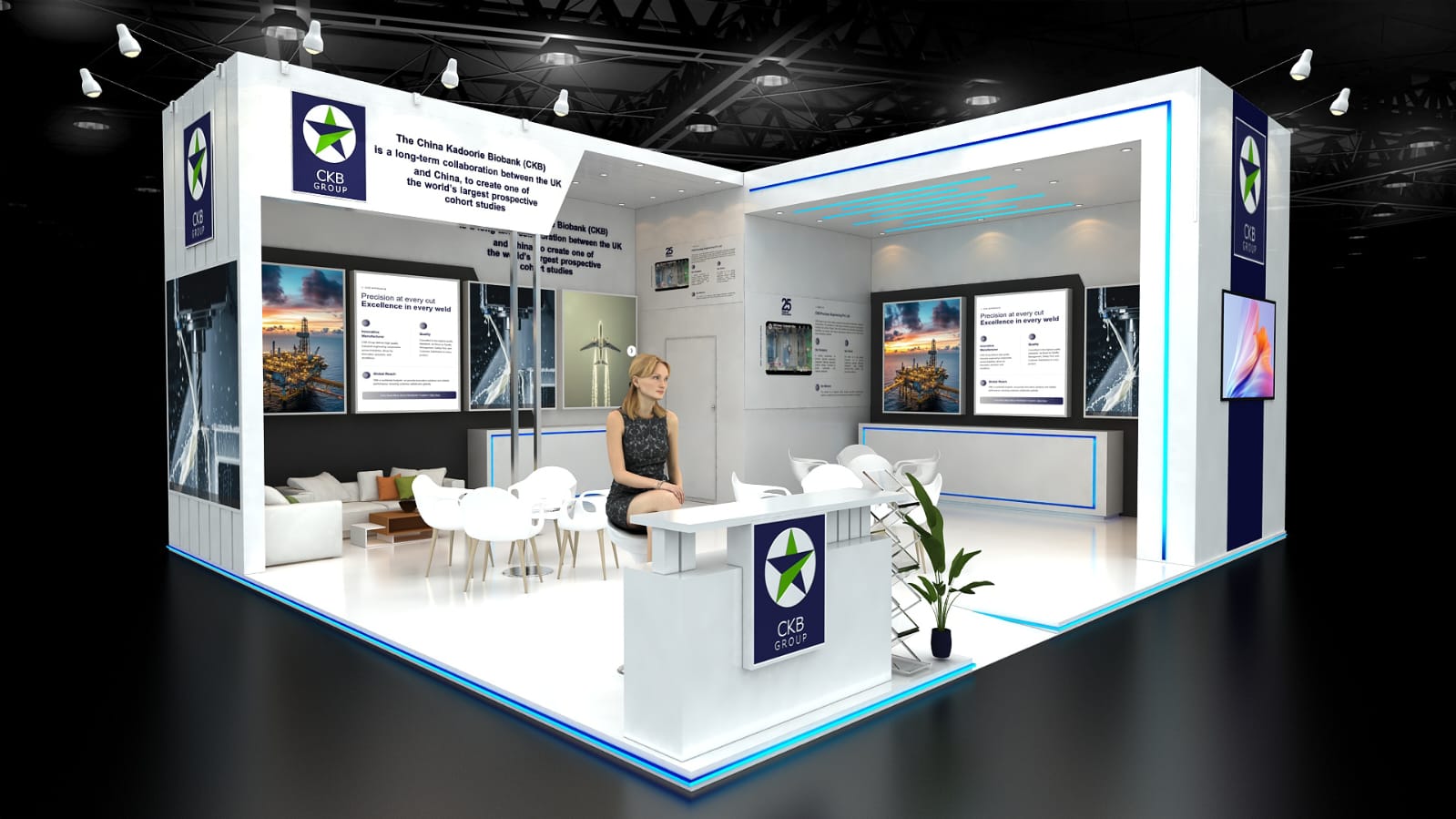
Introduction
Every year, India organizes hundreds of trade shows and exhibits covering a wide range of industries, including manufacturing, pharmaceuticals, fashion, and food technology. Every booth has a design process that, until recently, required costly agencies, lengthy turnaround times, and revision cycles that could take weeks to complete.
That has altered, though not all of them equally, thanks to AI-powered stall design tools. Some are true configurators who are aware of build realities, dimensions, and materials. Some are generic picture generators with "exhibition AI" badges on them.
This comparison blog covers every serious AI tool for exhibition stall and booth design available in 2026. It is scored on what actually matters: output quality, input depth, 3D design capability, turnaround speed, pricing, and whether it's genuinely built for tradeshows.
What Makes a Real AI-Powered Stall Design Tool?
It's important to define "AI powered stall design" precisely before comparing tools because the term is now used to describe a wide range of products.
1. Render quality is equal to brief depth :
If an AI design tool only takes text prompts, it will generate something that appears to be a stall but lacks practical reasoning. When an AI-powered stall design tool asks for booth dimensions, wall type, flooring material, furniture arrangement, lighting specifications, branding components, and power requirements, it will produce a response that both a client, 3D designer and a contractor can utilize.
2. Agency vs self-serve models :
Certain AI tools are human-run services that utilises AI to generate stall designs from the brief sent by you over mail. Others provide you with a controllable live dashboard. These products are essentially different for essentially different purposes.
3. Generic rendering vs 3D design for stalls :
Tools like Midjourney and Gemini generate beautiful 3d stall images but they have no concept of Octonorm systems, shell scheme panels, booth openings, or venue height restrictions. Expo-specific AI tools produce stall concepts grounded in how real booths are constructed and visualised.
4. Iteration Freedom :
Pitches can be won or lost on how quickly you can respond to "can we try it with marble flooring and backlit graphics?" A tool where you have to start building from scratch again to accomodate the changes or makes you wait hours, is not built for how rampant and quick, the industry actually works.
The 5 Best AI Powered Tools for Exhibition Stall Design in 2026
1. Easemyexpo
India's best AI-powered stall designer and the most comprehensive tool on the market currently.
Easemyexpo is the leading AI-powered 3D stall design tool built specifically for tradeshow and exhibition industry. It is the only platform that takes you through a complete, structured design brief, section by section before generating a photorealistic 3D stall render. The depth of configuration reflects a genuine understanding of how exhibition stands are specified and built in India.
Unlike every other tool in this list, Easemyexpo does not ask you to describe your stall in a text box. It walks you through 12 configuration sections, each one feeding the AI with real specified and accurate data.
Here is exactly what you set before a single render is generated:
Company & Event Info :
Company name, industry sector, exhibition name, event type (Trade Show, Conference, Product Launch, Networking Event, and more), and venue type (Exhibition Hall, Open Ground, Convention Centre). The AI uses this context to make design decisions appropriate to your sector and format. A pharmaceutical brand at a trade show will get a different visual direction than a fashion label at a product launch.
Booth Dimensions :
Width, depth, and height in metres or square feet. The platform auto-calculates total area and uses it to enforce space advisory logic — warning you when your room selections exceed what your footprint can realistically accommodate. This alone prevents the most common and most expensive mistake in booth design briefs.
Color Scheme :
Primary and secondary brand colour inputs including hex code entry. These are applied directly across walls, fascia, accents, furniture, and branding elements in the actual render.
Logo & Reference Image :
Upload your company logo and it appears on the stall in the generated render. Upload a reference booth image (up to 10MB) and the AI analyses its structural layout to replicate that configuration in your new design. The platform also auto-generates a written design description from all your form inputs, which you can review and edit before hitting generate.
Structure & Materials :
Choose your wall system: Octonorm System (modular aluminium frame, the most common system at Indian trade shows), MDF Panels, Laminated Plywood (premium wood finish), Modular Aluminium, or Island Booth (open floor plan, four open sides). These are the actual material systems Indian stand builders price and build with not aesthetic style labels.
Flooring:
Six options: Carpeting, Raised Wooden Flooring, Vinyl Finish, Laminate Flooring, Marble Finish, or Ceramic Tiles. Each produces a visually distinct floor surface in the render.
Ceiling Type :
Open Ceiling, Truss Lights, or Branding Fascia. A decision that changes the entire overhead character of a stand, and one that no other AI booth design tool asks about.
Design Preferences :
Six style themes: Modern, Minimalistic, Futuristic, Retro, Industrial, or Luxury — plus a free-text field for specific ideas, required zones, lighting mood, product display requirements, or any architectural feature you want included.
Additional Rooms & Spaces :
Storage Room, Meeting Room, Pantry, or Reception Area. The platform enforces space advisory logic in real time: if your booth dimensions can accommodate a maximum of 2 enclosed rooms, it tells you before you over-specify. No other AI stall design tool in this comparison does this.
Branding & Graphics :
Seven signage types with individual selection: Sunboard Graphics, Vinyl Graphics, Backlit Graphics, Fabric Prints, Flex Prints, 3D Lit Logos (with quantity input), and LED Video Wall. This level of signage specificity — especially the inclusion of Indian print formats like flex and sunboard alongside premium options like 3D Lit Logos — is found nowhere else.
Furniture & Fixtures :
Furniture style selector (Contemporary, Classic, Minimalist, Luxury), plus individual quantity inputs for 14 item types: Chairs, Centre Table, Single Seater Sofa, Double Seater Sofa, Triple Seater Sofa, Designer Sofa, Teapoy, Barstool, Conference Table, Boss Chair, Reception Counter, Display Shelves, Brochure Stands, and Storage Cabinets. Every item you select and quantify appears in the render.
Lighting & Electricals :
Choose from Basic Lighting, LED Lighting, Premium Lighting, Designer Lighting, or Smart Lighting System. Then enter your power requirement in kW and specify power type: Single Phase or Three Phase. Electrical specification at this level is completely absent from every other tool in this comparison. For Indian exhibitors coordinating with venue power teams, this matters.
Premium Extras :
Pantry Fit-out, Glass Meeting Room, Hanging Structures, Greenery & Decor, Branded Flooring Inlays. Optional enhancements that appear in the generated render when selected.
What it does better than anyone else:
- Most comprehensive pre-render brief of any AI tool for exhibition booth design.
- Real material and structural system selection (Octonorm, MDF, Laminated Plywood) not vague style labels.
- Furniture layout with individual item quantity control across 14 item types.
- Signage depth including Indian-specific formats (flex, sunboard) and premium options (3D Lit Logos, LED Video Wall)
- Electrical specification including kW and power phase, unique in the AI booth design category.
- Space advisory logic that prevents physically impossible room configurations in real time.
- Pricing: Credit-based; 3 free starter credits for new users, no minimum commitment.
- Turnaround: Generated in minutes, self-serve, instant generation.
- Model: Self-serve platform with structured 12-section design brief.
- Website: easemyexpo.in
2. EXHIBITIONSTANDS.COM
ExhibitionStands.com is a self-serve AI exhibition stand generator powered by their proprietary Expo.Fish AI engine which is built from scratch on exhibition-specific data including floor plans, visitor behaviour, and stand design trends. It is not a managed design-and-build agency. It is a free-to-use platform where you generate booth concepts yourself, then use their integrated contractor directory to find a builder to bring it to life.
The platform runs on a daily free credit model, meaning most users can generate without paying anything. Paid credits are available for heavier usage.
It has two generation tiers:
The standard AI Chat Generate mode handles the majority of use cases: you input your floorspace size, budget range, brand details, and colour scheme, upload your logo, and the AI generates a complete booth concept wrapped in custom-themed graphics like company name, tagline, and branding applied automatically.
A browser-based Smart Edits tool lets you scribble directly over areas of the render to specify changes, "add a supporting wall here," "change the counter" without re-briefing from scratch. A Respin button regenerates a completely new concept from the same brief in one click, making it fast to explore multiple directions.
The premium Ultra Generate tier, available to Big Fish subscribers, adds moodboard uploads, inspirational reference stand uploads, multi-generate for simultaneous options, photorealistic render styles, and explicit support for BeMatrix hybrid, Timber, and Double Decker stand formats structural systems common in UK and European exhibitions.
What it does well:
- Genuinely free with daily credits, no commitment required.
- Self-serve and instant, no waiting on a human operator.
- Respin button for fast multi-option exploration from the same brief.
- BeMatrix and modular system support in the Ultra tier.
- Integrated contractor directory bridges the gap between concept and build.
Where it falls short:
- Lighter brief depth, no control over material selection, furniture quantities, signage types, or electrical specification.
- Best features (moodboard uploads, photorealistic renders, BeMatrix support) locked behind paid Ultra subscription.
- Primarily built for UK/EU stand formats and contractor networks.
- Pricing: Free with daily AI credits; paid credits available for heavier usage; Ultra Generate requires Big Fish subscription.
- Turnaround: Generated in minutes and self-serve.
- Model: Self-serve AI generator + contractor directory.
3. EXPOBOOTH.AI
ExpoBooth.ai has established great brand recognition in the UK and European markets since its inception in early 2026, and it has been shortlisted for the Event Technology Awards. It is a familiar name in UK searches for AI exhibition booth design.
However, it is critical to be clear about what it is: a human-operated service that employs AI internally, it is absolutely not a self-service platform. You transmit textual briefs, moodboards, reference photos, or CAD files by email. A human operator passes the content through their AI workflow, which produces renderings. The minimum delivery time is one to two hours.
There is no configuration form, dimension input, material selection, or furniture specifications. Every design decision is determined by the operator depending on how they perceive your brief. That is the point for clients that appreciate human oversight and are satisfied with a service model. For agencies that need to iterate quickly and control output, it introduces precisely the delays and interpretation gaps they were attempting to eliminate.
What it does well:
- Human quality control at every step of the design process
- Cinematic 3D video output available from £750
- Strong fit for high-value bespoke pitches where a premium budget justifies a managed service
- Established presence in the UK/EU market with Event Technology Awards recognition
Where it falls short:
- Not self-serve, no dashboard, no instant generation.
- No structured brief form, all interpretations are done by a human operator.
- £500 minimum per render pack, which is quite inaccessible for most India/APAC budgets.
- Per-revision charges at £150–175 per round, capped at 3 changes.
- 1–2 hour minimum turnaround per brief.
- Pricing: From £500 per render pack; £750+ for cinematic 3D video
- Turnaround: 1–2 hours minimum per brief.
- Model: Human-operated AI render service.
4. SPACELY.AI
Spacely AI began as an interior design rendering tool and has now expanded into something more general; one of its specific use cases is now trade show booth visualisation. Give it a drawing, a floor plan, or a reference image, and it will create a polished, photorealistic booth concept in under a minute. The results appear satisfactory. The images are clean, modern, and visually appealing, making them suitable for sharing with a client or initiating a design conversation.
Nevertheless, the core tool remains an image-upload-to-render engine. You input a drawing, floor plan, or reference image, choose a style, and the AI will create a photorealistic graphic. There is no floorspace dimension input, material selection, furniture quantity control, signage specification, or electrical input. The product is style-led, modern, imaginative, and futuristic - rather than specification-led. It depicts what a booth could look like rather than what materials will be used to build it.
Spacely is ideal for exhibitors who already have a rough sketch or reference image and want to rapidly see how it appears in a finished render. The lack of structural input depth is a key barrier for exhibitors who begin with a blank brief and require a concept that a builder can actually price and create. It has no comprehension of Octonorm systems, shell design restrictions, Indian signage formats, or the material and build logic used by Indian stand contractors.
What it does well:
- Produces visually polished, photorealistic booth-style renders quickly.
- Good for style exploration: modern, creative, and futuristic booth aesthetics.
- Tabs for Lighting, Furnishing, and Post-processing give some post-render control.
- Affordable subscription pricing makes it accessible for frequent users.
Where it falls short:
- Style-led, not specification-led. No floorspace dimensions, wall system selection, furniture quantities, signage types, or electrical inputs.
- Requires an uploaded image or sketch to function. Cannot generate from a written brief alone.
- No understanding of Indian stand-building materials like Octonorm, MDF, flex prints, or sunboard.
- No expo-specific structural logic. Outputs are visual concepts, not buildable briefs.
- Pricing: From approximately $39/month.
- Turnaround: Under 1 minute.
- Model: Self-serve style rendering platform.
5. AI BOOTH DESIGN
AI Booth Design is a web-based booth visualisation tool built for exhibitors, marketers, and event planners who have never designed a stand before and don't want to learn how. No software to install, no design skills required, no agency fees. The pitch is simple: fill in a short form and walk away with a photorealistic booth concept in seconds.
The quickest option is Flexible Create, which involves entering your brand name, choosing your product category, choosing a standard booth size in feet or meters, manually choosing your colors or letting the AI choose them at random, and adjusting a realistic-to-creative slider to control how conventional or experimental the output looks. One click, five inputs, and the AI takes care of the rest.
With Custom Create, you have more control as the AI develops several concepts at once for comparison while you provide precise parameters from the ground up.
Create from Image allows you to alter the colors, design, and branding of a real-world booth photo that you like to create a photorealistic, unique version.
What it does well:
- Three creation modes cover different starting points: blank brief, full custom, or reference image upload.
- Realistic-to-creative slider gives meaningful control over output style without any design knowledge.
- All features are unlocked across every pricing tier with no gating.
Where it falls short:
- No wall system, flooring, ceiling, or material selection — the AI fills in all structural decisions itself.
- No furniture quantity control, signage types, lighting specification, or electrical inputs.
- Brief depth is significantly shallower, suitable for early-stage ideation but not final client presentations.
Conclusion :
In 2026, there are shockingly few serious AI tools for designing show booths, particularly for India. The majority of tools are either completely devoid of expo-specific intelligence, give control to a human operator, simply provide surface-level configuration, or are designed for the UK/EU market without taking into account the realities of stall construction in India.
One feature that no other platform can match makes EaseMyExpo the greatest AI tool for stall design in India is brief depth. You haven't described a feeling when you click produce after completing the 12-section configuration form. You've defined every detail of the stand, including the number of barstools, the power output in kW, if you want a glass conference room, and whether you want a full LED video wall or backlit panels on the front fascia.
These choices are reflected in the render that is returned. It's more than just a better picture. That's a quicker route to a signed project, a better brief, and a better client conversation.